Planodium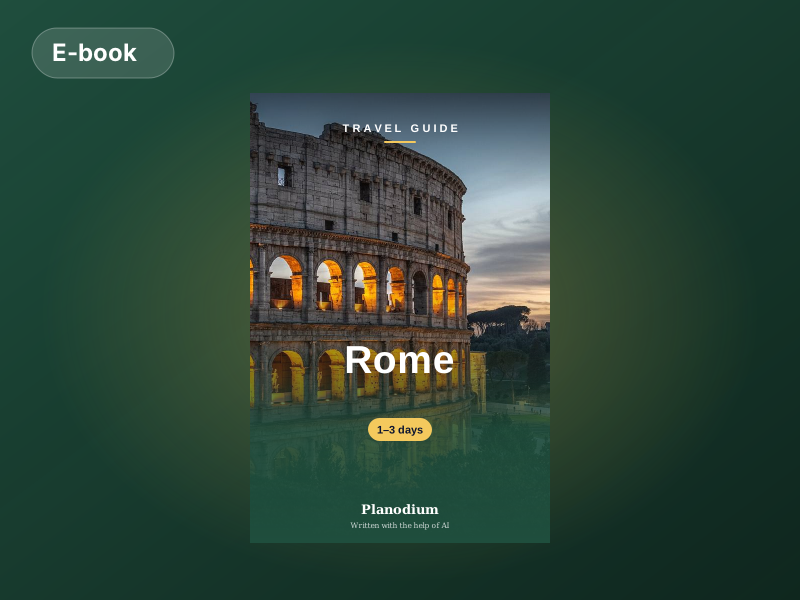
Rome in 1–3 Days – travel guide (e-book)
- Day-by-day plans for 1, 2 and 3 days
- The Colosseum, the Vatican, the Pantheon and Trastevere
- How to book and skip the longest queues
About the product
A compact, practical guide to Rome for a weekend or a short city break: clear plans for one, two or three days, the Colosseum and the Forum, the Vatican, the Pantheon and Trevi, the best neighbourhoods and food, how to book and avoid queues, and what it costs. With photos.
What you get
- Day-by-day plans for 1, 2 and 3 days
- The Colosseum, the Vatican, the Pantheon and Trastevere
- How to book and skip the longest queues
- Food, neighbourhoods, budget and events
- Approx. 21 pages with 5 photos
- EPUB for e-readers and PDF for phone, tablet or print
Read an excerpt
Rome at a glance
Rome is a city where almost three thousand years of history lie in layers on top of each other. A medieval church stands on a Roman temple, a baroque square follows the outline of an ancient stadium, and people still drink from fountains fed by Roman aqueducts. You cannot see everything in a weekend, and you do not need to. With a clear plan, you can see the great highlights and still have time for long lunches and evening walks.
The historic centre is compact and best explored on foot. The Colosseum and the Forum lie in the south-east, the Pantheon, Piazza Navona and Trevi in the middle, the Vatican across the river to the west, and Trastevere to the south-west.
Arriving
Fiumicino airport is about 30 kilometres from the centre. The Leonardo Express train runs to Termini station in about 32 minutes. Cheaper regional trains go to Trastevere and Ostiense stations. Taxis from Fiumicino to the centre have a fixed fare of about 55 euro (around 2026; check at the rank). Ciampino airport, used by some low-cost airlines, is connected by bus to Termini.
Getting around
Walk in the centre. The metro has only a few lines and does not reach many sights, but it is useful for the Vatican (Ottaviano), the Colosseum (Colosseo) and the Spanish Steps (Spagna). Buses and trams are frequent but crowded. Tickets (BIT) are valid for 100 minutes, and you can also tap a contactless bank card at the metro gates and on many buses. Taxis must be taken from official ranks or ordered by app.
Book these before you travel
- Colosseum, Roman Forum and Palatine Hill: timed tickets on the official site.
- Vatican Museums and Sistine Chapel: timed tickets; closed on most Sundays.
- Borghese Gallery: compulsory booking, limited numbers.
- Pantheon: a small entrance fee; booking recommended at weekends.
Neighbourhoods in brief
- Centro Storico: the Pantheon, Piazza Navona and countless churches and cafés.
- Monti: a village-like area near the Colosseum with wine bars and boutiques.
- Trastevere: cobbled lanes, ivy and lively evenings across the river.
- Prati: elegant and calm near the Vatican, with good restaurants.
- Testaccio: the old working-class area and the heart of Roman cooking.
… The excerpt continues in the book.
Contents (9 chapters)
- Before you go
- Rome at a glance
- Day 1: Ancient Rome
- Day 2: The Vatican and the old centre
- Day 3: Villa Borghese, Spanish Steps and Trastevere
- If you only have one day
- Food and drink
- Culture, events and useful words
- Where to stay and what it costs
Questions and answers
Are the photos free to use?
All photos are from Wikimedia Commons and are public domain, CC0 or CC BY. Photographers are credited at the back of the book.
How current is the guide?
Prices, rules and event dates were checked for 2026 and are updated in new editions. Prices are rough estimates, and entry rules and opening hours can change, so check official sources before you travel.
Was it made with AI?
Yes. The text was written with the help of AI and checked before publication.
Format and terms
Format: E-book as EPUB (Apple Books, Kobo, Google Play Books, Kindle via “Send to Kindle”) and PDF.. Made with the help of AI and tested by our quality control. Not tax, accounting or legal advice. Terms and right of withdrawal